

While the register was discontinued in 2025, the expectations underpinning it remain firmly embedded in the UK Corporate Governance Code. Under Provision 4, companies receiving 20% or more votes against a board recommendation are expected to explain how they intend to engage with shareholders and provide an update on actions taken.
Against that backdrop, the first five months of the 2026 AGM season provide an early indication of where investors continue to focus their attention.
Significant Shareholder Dissent Remains Rare
Of the c.3800 resolutions voted on between January and May 2026, only 52 received less than 80% support, representing only 1.4% of all resolutions out to a vote.
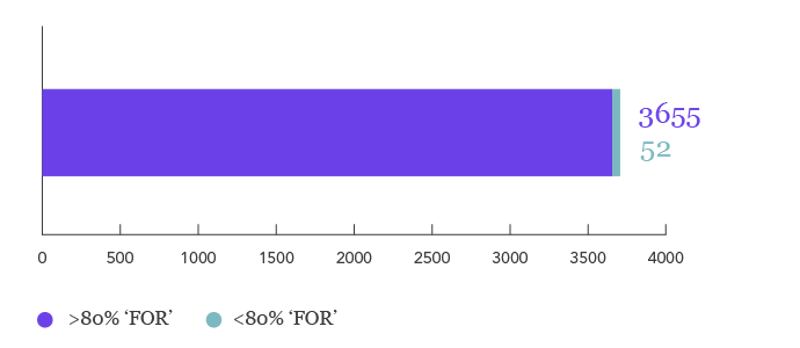
While significant shareholder opposition remains relatively uncommon, the resolutions that did attract substantial dissent reveal important insights into investor priorities and the governance issues boards continue to grapple with.
Of the 52 resolutions receiving less than 80% support:
- 19 related to executive remuneration matters
- 14 related to share capital authorities
- 13 related to director elections
- 4 fell into other governance categories
- 2 related to routine business
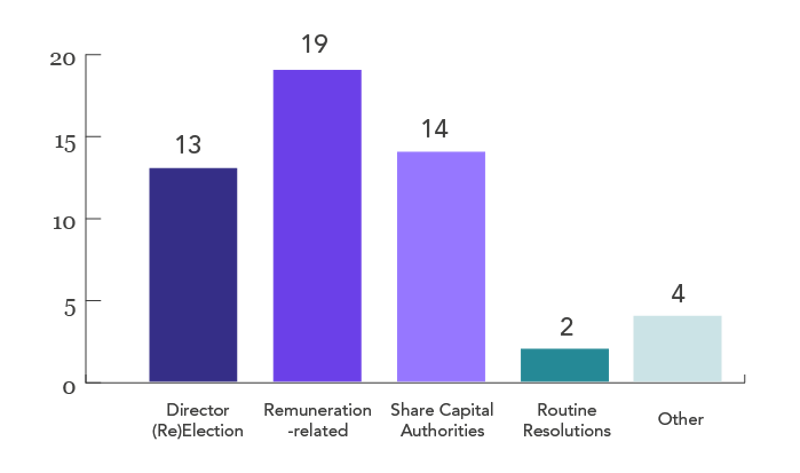
Although the overall level of dissent remains low, the themes driving opposition are strikingly similar.
Executive Pay Continues to Dominate Shareholder Dissent
Remuneration-related resolutions accounted for 19 of the 52 resolutions receiving less than 80% support (36.5%), making executive pay the single largest source of shareholder opposition during the period.
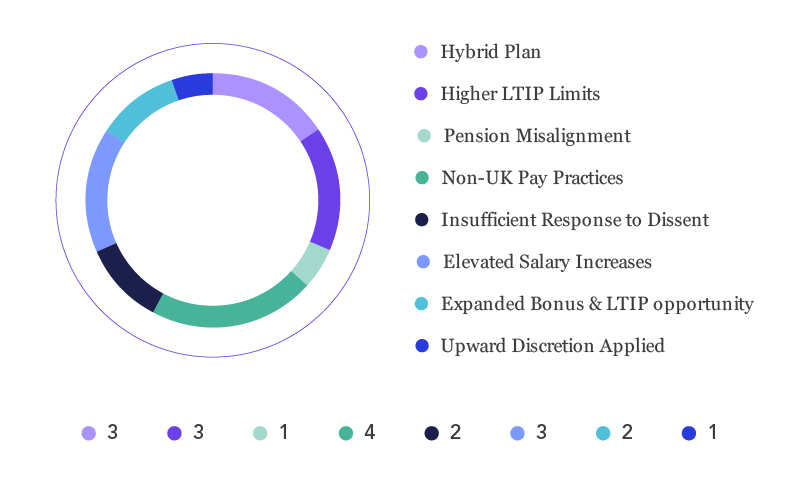
The concerns raised by investors were largely consistent across companies. The most common drivers of dissent included the introduction of hybrid incentive structures, increased long-term incentive opportunities, and significant salary increases. Several companies attracted opposition for increasing the quantum of executive remuneration without sufficiently compelling justification.
Perhaps most notably, a number of remuneration rebellions represented repeat concerns rather than new controversies. This suggests that investors remain focused not only on remuneration outcomes but also on how effectively boards respond following significant shareholder opposition.
The message from investors remains clear: remuneration structures that materially increase executive reward opportunities, particularly where they depart from UK governance norms, continue to face heightened scrutiny.
Investors are Increasingly Holding Directors Accountable
Director elections accounted for 13 of the 52 resolutions receiving less than 80% support, highlighting investors’ growing willingness to hold individual directors accountable for governance shortcomings.
A notable feature of the voting outcomes was increasing focus on individual accountability. Rather than solely opposing remuneration reports or policies, investors frequently directed their concerns towards those responsible for oversight in that area.
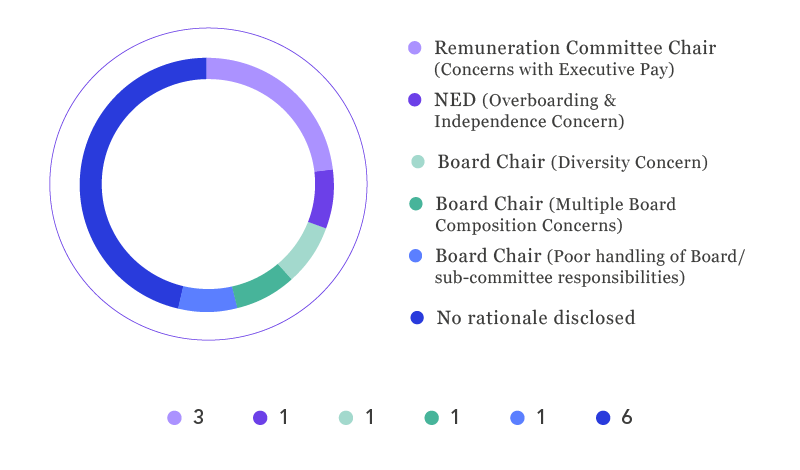
Remuneration Committee Chairs were among the most common targets, reflecting dissatisfaction with executive pay decisions. This trend reflects the continuing evolution of stewardship practices. Investors appear increasingly willing to use director elections as a mechanism for expressing dissatisfaction where they believe boards have failed to respond appropriately to concerns.
For directors, particularly Committee Chairs, the consequences of governance decisions are becoming increasingly personal.
Not Every Sub-80% Vote Reflects a Governance Failure
One of the most interesting findings from the 2026 AGM season is that not all resolutions receiving less than 80% support were driven by governance concerns.
Share capital authorities represented 14 of the 52 sub-80% resolutions, making them the third largest category of dissent. However, unlike remuneration and director-election resolutions, none received an “Against” recommendation from either ISS or Glass Lewis. In every case, both proxy advisors supported management.
The primary factor behind these voting outcomes appears to have been shareholder structure rather than company-specific governance concerns.
This distinction is important. Certain shareholder bases can consistently produce lower levels of support for share capital authorities, regardless of whether the proposal aligns with market practice or investor guidelines.
As a result, boards should be careful not to interpret every sub-80% outcome as evidence of a governance issue. Context remains critical when assessing voting results.
What Boards Should Take Away
The retirement of the Public Register has not diminished the importance of shareholder dissent as a governance signal.
Although only 52 resolutions received less than 80% support during the first five months of 2026, the issues driving opposition were familiar: executive pay, director accountability and the effectiveness of shareholder engagement.
Perhaps the most notable theme was the persistence of previously identified concerns. A number of the most contested resolutions involved issues that had attracted shareholder opposition in prior years, suggesting investors remain focused not only on the decisions boards make, but also on how they respond when concerns are raised.
For boards, this reinforces a key principle underpinning Provision 4 of the UK Corporate Governance Code: engagement does not end when the votes are counted. Investors increasingly expect companies to demonstrate how feedback has been considered, what actions have been considered, what actions have been taken and why the board believes its response is appropriate.
Beyond the Public Register
The Public Register may be gone, but the expectations it helped establish remain firmly in place. The first five months of the 2026 AGM season suggest that investors continue to use their voting rights selectively, but purposefully to hold boards accountable. While significant shareholder dissent remains relatively rare, the message behind many of this year’s contested votes was consistent: investors expect boards not only to listen, but to demonstrate that they have acted.